Handmade Note: A Unique Handwritten Font for Creative Projects
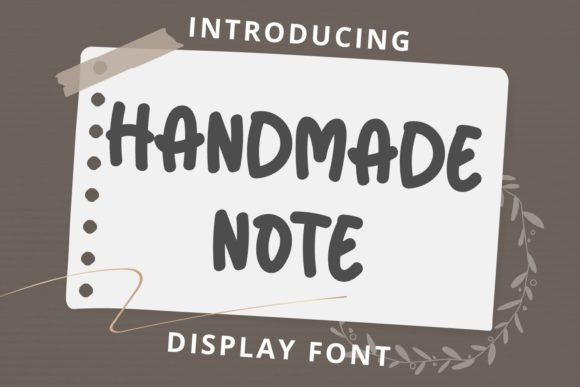
Handmade Note is a distinctive handwritten and display font that offers a personal touch to any design project. Its natural, irregular strokes mimic the look of real handwriting, making it ideal for adding authenticity and warmth to visual content. Whether you're working on branding, web design, or print materials, Handmade Note can bring a unique flair that sets your work apart.
What Is Handmade Note?
Handmade Note is a font designed to replicate the appearance of handwritten text. Unlike traditional fonts that follow strict geometric shapes, this typeface features subtle variations in letterforms, giving it a more organic feel. The font is often used in contexts where a human element is desired, such as in invitations, logos, or social media graphics. Its versatility allows it to be used in both digital and print formats, making it a valuable addition to any designer's toolkit.
Why Consider Handmade Note?
There are several reasons why designers and creators might choose to use Handmade Note. First, its handwritten style can evoke a sense of approachability and sincerity, which is particularly useful in marketing or communication materials. Second, the font adds a level of uniqueness that can help differentiate a brand or project from others. Finally, because it mimics real handwriting, it can be an effective tool for creating a more personal connection with the audience.
Benefits of Using Handmade Note
One of the primary benefits of Handmade Note is its ability to add character to a design. The irregularities in the letterforms create a more dynamic and engaging visual experience compared to standard fonts. Additionally, the font's readability is generally good, especially when used in smaller sizes or for short phrases. This makes it suitable for a wide range of applications, including headings, captions, and even body text in certain cases.
Another advantage is the emotional impact of the font. Handwritten styles often convey a sense of authenticity and individuality, which can be beneficial in branding or storytelling. For instance, businesses looking to establish a more personal or artisanal image may find Handmade Note to be a fitting choice.
Tradeoffs and Considerations
While Handmade Note has many strengths, there are also some tradeoffs to consider. One potential drawback is that the font may not be as legible as more traditional typefaces, especially in larger blocks of text. This means it may not be the best choice for long paragraphs or dense information-heavy content. Designers should test the font in different sizes and contexts to ensure it meets their needs.
Another consideration is the font's availability and licensing. Depending on the platform or software being used, Handmade Note may not be included by default, requiring additional downloads or purchases. It's important to verify compatibility and licensing terms before incorporating the font into a project.
Situations Where Handmade Note Shines
Handmade Note is particularly well-suited for projects that benefit from a personal or creative touch. For example, it can be an excellent choice for wedding invitations, thank-you notes, or promotional materials that aim to convey a sense of warmth and individuality. In digital design, the font can be used in social media posts, banners, or website headers to add visual interest and personality.
Additionally, Handmade Note can be effective in educational or artistic contexts. Teachers or educators may use it to create handouts or lesson plans that feel more engaging and less formal. Artists or illustrators might incorporate it into their work to add a handmade quality to their designs.
When Alternatives Might Be Better
There are scenarios where other fonts may be more appropriate than Handmade Note. For instance, if clarity and consistency are paramount—such as in technical documentation, legal forms, or user interfaces—a more structured font like Arial or Helvetica may be preferable. These fonts offer better readability and uniformity, which can be crucial in certain professional settings.
Similarly, if a project requires a more modern or sleek aesthetic, a sans-serif or serif font might be a better fit. Designers should consider the overall tone and purpose of their work when selecting a font, ensuring that it aligns with the intended message and audience.
Practical Decision-Making Insights
When deciding whether to use Handmade Note, it's helpful to evaluate the specific needs of the project. Ask yourself questions such as: Does the design require a personal or creative touch? Will the font enhance the message or distract from it? How will it perform in different sizes and formats?
Testing the font in various contexts is also essential. Experiment with different layouts, colors, and text lengths to see how Handmade Note performs. This process can help identify any potential issues and ensure that the font meets the project's requirements.
Finally, consider the target audience. If the goal is to connect with a younger or more casual demographic, Handmade Note may be an effective choice. However, if the audience expects a more formal or polished look, alternative fonts may be more suitable.
Conclusion
Handmade Note is a versatile and expressive font that can add a unique personality to a wide range of design projects. Its handwritten style offers a fresh and authentic alternative to standard typefaces, making it ideal for creative and personal applications. However, it's important to weigh its benefits against potential limitations, such as readability and context suitability. By carefully evaluating the needs of each project, designers can determine whether Handmade Note is the right choice or if another font may be more appropriate.