Family Tree: A Versatile Font for Creative and Professional Workflows
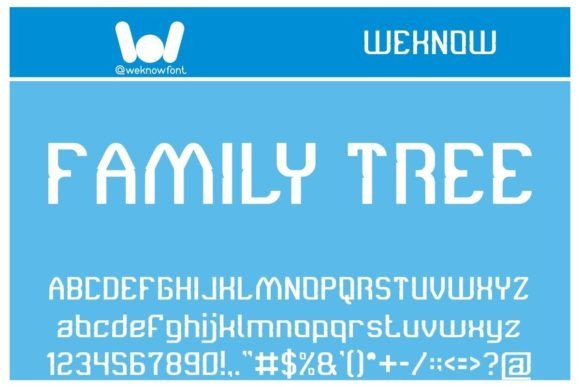
Family Tree is a distinctive display font that brings a sense of elegance and structure to any visual project. Its clean lines and balanced proportions make it ideal for a wide range of applications, from logos and headlines to branding and design assets. Whether you're working on a corporate identity, a music album, or a digital publication, Family Tree offers a refined aesthetic that can elevate your creative output.
This font is particularly useful in scenarios where clarity and sophistication are essential. It works well in both print and digital formats, making it a valuable addition to your design toolkit. Understanding how to integrate Family Tree into your workflow can enhance the quality and consistency of your projects while streamlining your creative process.
Understanding Family Tree in the Design Process
Before diving into specific use cases, it's important to recognize where Family Tree fits within the broader design process. As a display font, it is typically used in the final stages of a project—after the core elements like layout, color scheme, and imagery have been established. However, its influence can be felt earlier, especially during the planning and conceptual phases.
When selecting a font, consider how it will interact with other design elements. Family Tree’s readability at larger sizes makes it suitable for headings, titles, and banners, but it may not be the best choice for body text. This distinction is crucial when building a visual hierarchy that guides the viewer’s attention effectively.
Designers often choose fonts based on the message they want to convey. Family Tree’s structured yet artistic style can communicate professionalism, creativity, or even nostalgia, depending on the context. By aligning the font with the overall tone of the project, you can ensure that every visual element supports the intended message.
Using Family Tree in Different Project Phases
Family Tree can be incorporated into various stages of a project, from initial concept development to final execution. During the ideation phase, it can help visualize how text elements will look in the final design. This allows for early adjustments and ensures that the typography complements the rest of the composition.
In the execution phase, Family Tree can serve as a unifying element across multiple design assets. For example, if you're creating a brand identity package, using the same font for logos, business cards, and social media profiles can reinforce brand consistency. This approach not only improves visual cohesion but also strengthens brand recognition over time.
After a project is complete, Family Tree can still play a role in long-term maintenance and updates. If you need to refresh a website or redesign a marketing campaign, having a consistent font choice simplifies the process and maintains a professional appearance.
Integration with Other Tools and Resources
Family Tree works well with a variety of design tools and platforms. Whether you're using Adobe Creative Suite, Figma, Canva, or other design software, the font is likely available in most standard libraries or can be easily imported. This compatibility ensures that you can apply it consistently across different projects and environments.
When working with teams, sharing font files or linking to font services like Google Fonts can streamline collaboration. This practice helps maintain uniformity across team members’ work and reduces the risk of inconsistencies in the final output.
Additionally, Family Tree can be paired with other fonts to create dynamic typographic combinations. For instance, pairing it with a sans-serif font for body text can provide contrast while maintaining visual harmony. Experimenting with different pairings can lead to more engaging and effective designs.
Practical Implementation Tips
To get the most out of Family Tree, start by testing it in different contexts. Create mockups or prototypes to see how it looks in various sizes and placements. This step can reveal potential issues, such as legibility problems or spacing inconsistencies, before they become a problem in the final design.
Consider the target audience when choosing where to use Family Tree. A more formal setting, such as a corporate report or academic publication, may benefit from its structured appearance, while a creative project like a music album or art exhibition might highlight its artistic qualities.
When working on digital projects, ensure that the font is properly embedded or linked to avoid display issues. This is especially important for websites and online portfolios, where inconsistent font rendering can detract from the user experience.
Workflow Examples and Use Cases
One common use case for Family Tree is in logo design. Its balanced structure and elegant curves make it an excellent choice for brands that want to convey a sense of tradition and refinement. When designing a logo, experiment with different weights and styles to find the version that best represents the brand’s identity.
For print materials, such as brochures, posters, or packaging, Family Tree can add a touch of sophistication. It pairs well with high-quality images and minimalistic layouts, allowing the text to stand out without overwhelming the design. In these cases, focus on spacing and alignment to ensure that the typography enhances the overall composition.
In digital marketing, Family Tree can be used for social media headers, email newsletters, or website banners. Its visibility at larger sizes makes it ideal for eye-catching calls to action or promotional content. When using it in these contexts, keep the surrounding design elements simple to avoid visual clutter.
Long-Term Considerations and Maintenance
As your design needs evolve, so too should your font choices. While Family Tree is a versatile option, it may not always be the best fit for every project. Regularly assess its effectiveness in new contexts and be open to experimenting with other fonts when appropriate.
Maintaining a consistent font library can also improve efficiency. By limiting the number of fonts used across projects, you reduce the complexity of your design process and ensure that your work remains cohesive over time. This approach is particularly beneficial for businesses and creatives who manage multiple projects simultaneously.
Finally, stay informed about font trends and updates. New versions of Family Tree or similar fonts may introduce features that better suit your workflow. Keeping up with these developments can help you stay ahead in a competitive design landscape.